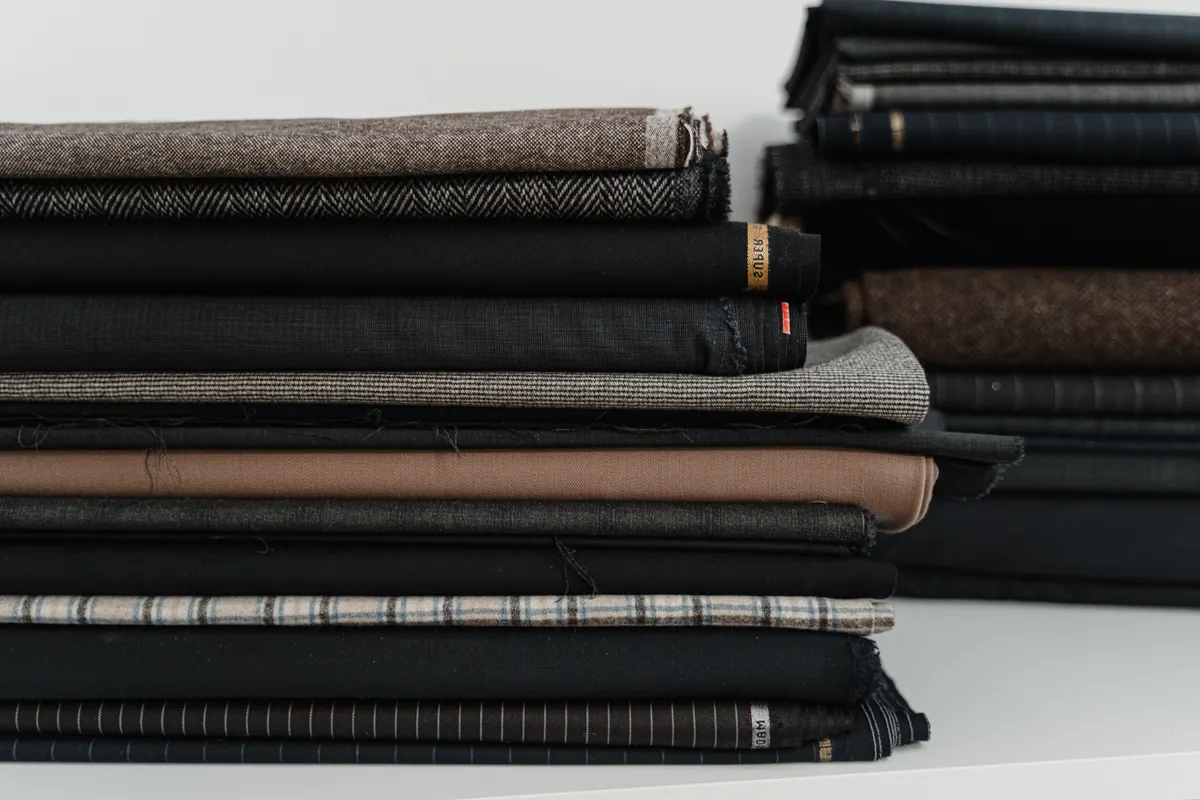
THE MATERIAL NOTEBOOK / EDITION 01
Feel the difference.
Read the details.
A fabric name begins the conversation. Weight, construction, lining and finish decide how a particular garment lives on the body.
What can the composition label tell you?
Read the exact fibre composition and then the care label. A silk garment can be crisp or fluid; wool can appear in sharply structured or softly draped pieces. A blend is not automatically inferior to a single fibre. Ask what the material and construction are intended to do in the garment you are considering.
How should you compare silk crepe and satin?
Crepe and satin describe different fabric structures or finishes, not a universal fibre content. For a soft evening direction, compare how a crepe blouse falls beside a wool trouser. For a more reflective surface, consider a satin garment and check the exact composition, opacity and lining. Move under different lighting rather than judging only a still photograph.

What matters in wool tailoring?
Look at the shoulder, lapel, front closure and the fall of the trouser. A softer jacket may suit relaxed dressing; a more defined structure can create a sharper line. Compare Giorgio Armani, Zegna and Max Mara as design directions, then check the exact weave, weight and lining. Structured virgin wool is a material brief, not a guarantee that every jacket carrying those words will fit alike.
How should you judge a cashmere layer?
Start with the role: a fine layer beneath tailoring or a fuller knit worn on its own. Compare the exact composition, knit density, seams and care requirements. Brunello Cucinelli, Loro Piana and Zegna provide different research directions. A soft first touch alone does not establish durability, and a thicker knit is not automatically the right choice for your climate.
What should you inspect before keeping a garment?
Check that seams and hems lie as intended, closures operate comfortably and the lining does not pull while you sit or reach. Compare the garment in ordinary light with the underlayers you plan to wear. Follow the retailer’s fitting and return instructions and settle the return decision before alterations.
How do you make the care decision practical?
Read the maker’s instructions for the complete garment, including trims and lining. Do not assume one washing or steaming method is safe for everything made from the same fibre. Ask about specialist care when the instructions are unclear, and include realistic cleaning and alteration costs in the budget.
Wear the wardrobe foundations · Prepare a fitting · Assess wardrobe value
Make a care note before buying
Write the garment’s care instructions beside the composition, then consider where you will store and clean it. Woolmark’s wool-care resources separate washing, drying and repair questions. Use the relevant guidance alongside the complete garment’s label, including its lining and trims.