THE FIT NOTEBOOK
Good fit starts
with good information.
A size label is a starting point. Compare the exact retailer's chart, your measurements and a garment you already enjoy wearing.
Body measurements and garment measurements differ
Check which kind a chart provides. A garment includes ease for movement and layering; do not expect its circumference to equal your body measurement. Use the retailer's measurement instructions and the same units throughout. Do not assume US, UK, Italian or French sizes convert consistently across designers.
Jackets and shirts
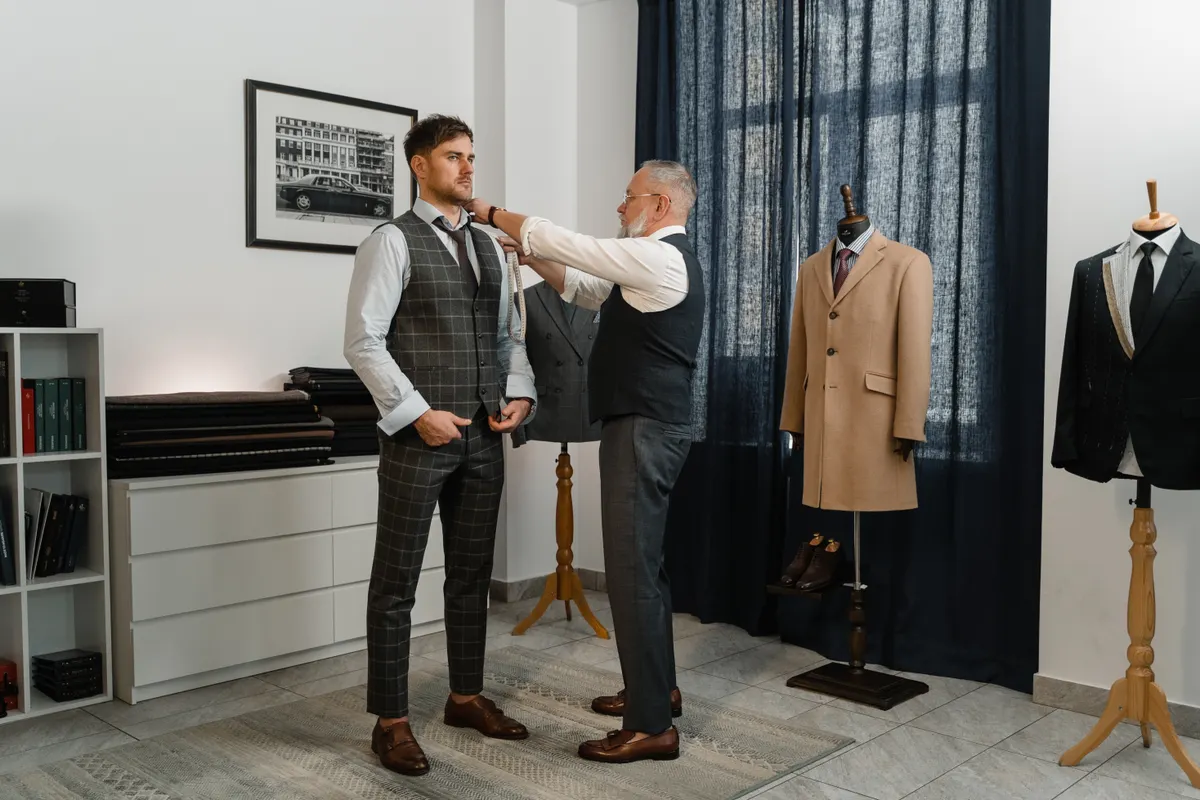
Try the intended underlayer. Check that the shoulder sits as designed, the collar lies comfortably and the front closes without pulling. Move your arms and sit down. Oversized and dropped shoulders are intentional cuts, not automatically fit faults. Ask a tailor about feasibility before buying a jacket that needs shoulder alterations.
Trousers and skirts
Check the waist at the intended rise, then the hip and thigh while sitting. Pin the hem wearing the actual shoes. A fuller trouser may need a different length from a narrow ankle cut; leave clearance so fabric does not catch under the heel. Confirm seam allowance before relying on extra length.
Dresses and evening pieces
Test sitting, walking and raising your arms. Check necklines, fastening access and opacity in realistic lighting with your intended underlayers. A bias-cut fabric may settle differently after hanging; ask the maker or tailor before adjusting the hem.
Footwear
Measure both feet using the retailer's method. Check width, toe space, heel hold and comfort with the intended socks or hosiery. Walk indoors on a clean surface while preserving return eligibility. Do not rely on painful shoes stretching to fit.
Before an alteration
Confirm the return decision first: altered merchandise may no longer be returnable. Get a quote and explain the intended silhouette. Small hem or sleeve changes can help, but construction, pocket placement and seam allowance limit what is possible.
Modern wardrobe essentials · Refined footwear · Personal style